
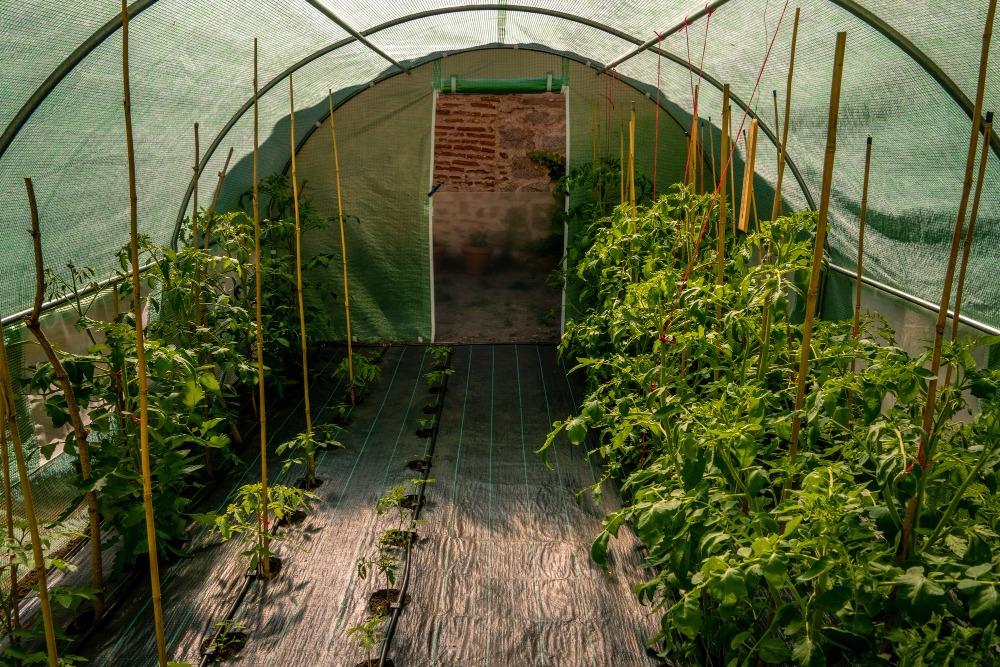
In an era where food security and sustainable agriculture are top priorities, greenhouses have emerged as a smart and effective solution to address climate challenges and improve agricultural productivity. Whether you're a professional farmer or a hobbyist looking to grow organic produce year-round, the success of your project depends almost entirely on the quality of the greenhouse equipment you choose. In this comprehensive guide, we'll take you on a detailed tour of everything you need to know about greenhouse equipment, from its definition and coverings to cooling and irrigation systems, and where to find a greenhouse supply store.
What are the requirements for greenhouses?
Before delving into the details, we must understand precisely what we mean by greenhouse equipment. It is a set of components, tools, and systems that work together to create an ideal climatic environment for plant growth within the protected structure. This equipment is not limited to covers and poles, but also includes irrigation, cooling, and environmental control systems.
Why is choosing the right supplies important?
- Improved productivity: Providing the ideal climate of temperature, humidity and ventilation increases crop productivity by up to 300% compared to open-field farming.
- Reduce losses: Protect plants from pests, heavy rain, strong winds and harmful sunlight.
- Water conservation: Modern systems reduce water consumption by up to 70% compared to traditional agriculture.
- Off-season production: This allows you to grow the desired crop at any time of the year, ensuring higher financial returns.
Complete list of essential greenhouse supplies
If you are thinking of starting an agricultural project, here is a comprehensive list of greenhouse supplies you will need:
- The load-bearing structure: This is the backbone of the greenhouse, usually made of galvanized steel or aluminum to resist rust and harsh weather conditions.
- Greenhouse covers: The outer cover that separates the internal environment from the outside (plastic, polycarbonate, glass).
- Ventilation and cooling systems: These include exhaust fans, cooling cells, and automatic vents.
- Irrigation and fertilization systems: drip irrigation networks, sprinklers, and controlled fertilization systems.
- Environmental control devices: temperature and humidity sensors, smart control panels, and pH meters.
- Agricultural extensions: shade netting, insect netting, and fixing clips.
- Fertilizers and pesticides: Supplies specifically designed for protected agriculture to ensure healthy and safe growth.
A comprehensive comparison between plastic, polycarbonate, and glass
Greenhouse coverings are among the most influential elements affecting the project's efficiency. Choosing the right covering determines the amount of light entering, thermal insulation, and the project's lifespan.
Plastic (polyethylene) covers
- Features: Lower cost, easy to install, flexible, and allows 85-90% of light to pass through.
- Disadvantages: Short lifespan (1-3 years depending on quality), prone to tearing and less thermal insulation.
- Ideal use: Temporary projects and farmers starting with limited capital, or for crops that require a short growing cycle.
polycarbonate sheets
- Features: Excellent thermal insulation, high impact resistance, long lifespan (10-15 years), significantly reduces heating and cooling costs.
- Disadvantages: Higher initial cost, may slightly reduce light transmission compared to pure glass.
- Ideal use: Long-term projects, in areas with severe climatic changes.
Double or tempered glass
- Features: Highest light transmittance (99%), luxurious aesthetic appearance, and virtually unlimited lifespan.
- Disadvantages: The most expensive option, heavy weight and requires a strong frame.
- Ideal use: luxury nurseries or research centers, or in agricultural tourism areas.
Cooling systems in greenhouses
In the Middle East, controlling high temperatures is a major challenge. To ensure uninterrupted growth during the summer, an efficient cooling system is essential. The best systems rely on negative pressure or evaporative cooling.
cooling cells and fans system
This system is the most common and efficient for large greenhouses. High-powered exhaust fans are mounted on one wall to draw hot air out, creating negative pressure. On the opposite wall, cooling cells are installed over which water is continuously passed. As hot air from outside passes through these wet cells, the water evaporates, naturally cooling the air before it enters the greenhouse.
Fogging Irrigation System
This system is primarily used in greenhouses with glass or polycarbonate coverings. It works by pumping water at high pressure through fine nozzles, producing a dense mist. As this mist evaporates, it rapidly absorbs heat from the air. It precisely controls temperature and humidity, making it ideal for sensitive crops such as mushrooms or leafy greens.
Irrigation systems suitable for greenhouses
The success of a greenhouse cannot be separated from the irrigation system used. The choice of irrigation system depends on the type of crop and soil conditions.
Drip irrigation
- Most commonly used in greenhouses for growing tomatoes, cucumbers, and peppers.
- Features: Saves up to 50% of water, directs water directly to plant roots, reduces weed growth and limits the spread of fungal diseases on leaves.
- Supplies: Drippers, polyethylene pipes, pressure regulator and fertilizer unit.
Sprinkler irrigation
- It is used in nurseries to produce seedlings or for crops that need moisture on the leaves.
- Features: It covers a large area and helps to slightly reduce the ambient temperature.
- Disadvantages: It increases atmospheric humidity, which may cause fungal diseases if not controlled.
Mist irrigation
- Essential in propagation processes (cutting culture) and in some types of hydroponics.
- Features: Creates 100% ideal humidity around young plants, helps to reduce heat locally.
Greenhouse structures and columns
The structures and columns of greenhouses bear the weight of the coverings, wind, and weather. When choosing a structure, you should consider two factors: durability and corrosion resistance.
- Hot-dip galvanized steel: The best choice in the Gulf region due to high humidity and salt content. Hot-dip galvanizing ensures the structure will not rust for decades. Used in tubular or multi-span greenhouses.
- Aluminum: Lightweight, never rusts, and aesthetically pleasing. However, it is less durable for heavy loads such as glass or heavy snow and more expensive than steel.
- Treated wood: It is rarely used nowadays due to its short lifespan and need for continuous maintenance, but it may appear in small traditional houses.
Environmental control devices in greenhouses
With the move towards Agriculture 4.0, smart greenhouse control has become a necessity, not a luxury. These systems rely on:
- Sensors: Measure temperature and humidity inside and outside the greenhouse, wind speed, and solar radiation intensity.
- Controller: A smart unit that analyzes data and automatically operates fans, cooling cells, or vents without human intervention.
- Remote control systems: These allow you to monitor the status of the protected house via your mobile phone from wherever you are, and receive alerts in case of any malfunction.
Fertilizers and pesticides for greenhouses
The fertilizers and pesticides used in greenhouses differ from those used in open-field farming due to the environmental isolation. We recommend the following:
- Soluble fertilizers are best suited for modern irrigation systems. High-purity fertilizers should be used to avoid clogging the emitters.
- Fertilization program (NPK): varies according to the growth stage. The vegetative growth stage requires high nitrogen, while the flowering and fruit set stage requires high phosphorus and potassium.
- Biological control: In greenhouses, biological control can be relied upon. Releasing beneficial insects such as predatory mites instead of chemical pesticides produces a healthy and safe organic crop.
How to choose the best greenhouse supplies supplier in your country
The success of your project depends on the reliability of your greenhouse supplies store . Look for:
- Experience: A company with many years in the market and previous projects that can be visited.
- Quality of materials: Are hot-dip galvanized steel used? Does the plastic protect against UV rays? Are the fans a well-known brand?
- After-sales service: Warranty on structures and equipment, and provision of spare parts.
- Integration: Does the supplier offer a complete solution (structure + cooling + irrigation) or just sell separate parts?
- Market reputation: Read reviews, and ask other farmers about their experiences.
Thus, Al-Talib store stands out As one of the trusted names in the world of modern agricultural supplies, it offers integrated solutions to suit different budgets and climates in the Arab region.
Conclusion
Creating a successful greenhouse isn't simply about buying a structure and placing it in the ground; it's a comprehensive engineering project that relies on the correct selection of greenhouse components, from columns and coverings to smart control systems. With technological advancements, agriculture has become easier and more efficient than ever, provided you work with reliable partners who offer high-quality products and professional technical advice.
Remember that investing in quality today means savings on maintenance and increased production for years to come. Don't hesitate to contact Al Taleb Store for technical support to plan your project meticulously, because your agricultural success is our top priority.
Frequently Asked Questions
What is the best type of flooring for greenhouses?
It is preferable to use a natural soil substrate covered with black plastic to prevent weeds and reduce water evaporation, or to use concrete slabs in the case of hydroponic farming.
Can I use the greenhouse in winter?
Yes, greenhouses work in winter too. In colder regions, double coverings can be used or simple heating systems like pipe heaters can be added to maintain the temperature at night.
What is the expected lifespan of polycarbonate?
High-quality polycarbonate (6-10 mm thick) with a UV protection layer can last 10 to 15 years in normal climatic conditions.